Choose a story sequence or a collection escape
Choose Story Mode for Episode 1’s connected scenes, camera objectives and quick-time events. Choose Chase when you want the pressure of searching for escape items while an entity pursues you. For THRESHOLD Story vs Chase, decide which task you want to practice. Each mode has its own route and objectives.
Both modes are available in the beta experience. Open the current mode menu before starting, especially after an update; a Story scene guide will not tell you where to collect a Chase key.
Compare the work each mode asks you to do
| Mode or objective | Main task | Progress check | Good practice goal |
|---|---|---|---|
| Episode 1 Story | Move through a sequence of objectives and defenses | The current instruction changes after a scene | Learn the next input before the pressure starts |
| Maintenance-key Chase | Search for keys and deposit them at the exit | Check the key requirement and exit progress | Finish a search without repeating rooms |
| Scrow Chase | Find password papers and enter your round’s digits | Watch the gathered-paper progress and keypad | Search efficiently before chasing a fast time |
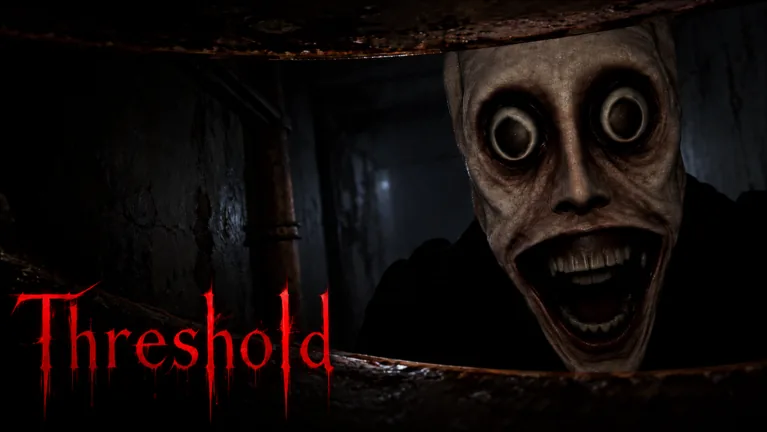
Story keeps changing what needs your attention. Photographing the entity’s face requires aiming; circle prompts require clicking; the vehicle scene requires watching windows and reacting to directional arrows. Watch for the next instruction instead of repeating the last action.
Chase gives you a collection problem inside the pursuit. An enemy encounter does not tell you whether the search is finished. Check your objective progress, then use the exit interaction for that objective. Running to the door without the required keys or papers wastes the route you just took.
What Story teaches
Episode 1 begins around Blox Street 12 with Mom, the camera and a carry objective. It moves into paper-fragment collection, an assembly step, an escape with circle and slide prompts, and Danny’s vehicle sequence. A shop break gives you batteries and a sanity-restoration objective before the supermarket’s conflicting guidance.
Later, a low-sanity warning leads into a hallucination defense scene. The final dark section returns you to movement and escape. Follow each scene change: stop exploring when a reaction task starts, then check your inventory during the quieter shop break.
Read the Episode 1 walkthrough for the full sequence. Use individual scene guides when only one section is stopping your run; replaying the whole overview will not explain a missed window arrow as clearly as the window defense guide.
Chase objectives need different searches
Maintenance-key Chase and Scrow’s mall do not use interchangeable collectibles. For the maintenance objective described here, search for three keys and put them into the exit. Hold the displayed interaction when taking a key, then verify the exit’s progress when using it. Use the key at the exit to advance the deposit objective.
Scrow centers on password papers. A food-court-first search is a useful starting route, but paper placement varies. Widen the search into the stairs and market when the upstairs sweep leaves you short. Enter the digits you gathered rather than copying a successful video’s code.
The official game description warns that Chase can hear you and react to spoken words. Decide whether you are experimenting with that interaction or trying to finish the collection task. Talking to the entity while forgetting the remaining objective makes the run harder to learn. Silence still leaves you responsible for movement, pursuit and the exit.
Compare completion with participation
The official badge inventory separates Played Story Mode from Finished Episode 1 [DESPAIR]. It also separates Played Chase Mode from Won Chase mode. Entering a mode and completing it are different milestones.
Treat those names as goals, then check your account’s actual award after the run. A badge name cannot tell you the value of a hidden reward. Check that the game registered a win rather than assuming an exit-looking scene finished the run. If your aim is a completion badge, stay through the finish rather than leaving as soon as the immediate danger passes.
For a first session, use Story to learn changing prompts or choose one Chase objective and repeat it until you understand its search. Save perk comparisons and speedrun timing for runs where you can already identify what remains unfinished.
FAQ
Is Chase the same route as Episode 1?
No. Episode 1 follows connected Story scenes. Chase uses collection-and-exit objectives under pursuit, including maintenance keys and Scrow password papers.
Which mode has camera and window scenes?
Story includes the opening face-photo objective, Danny’s window defense scene and later camera-based defense. Do not use that scene order as a Chase route.
Do Story paper fragments unlock the Scrow keypad?
No. Story fragments belong to an assembly step; Scrow’s papers provide digits for the mall escape.
Does entering Chase count as winning it?
The badge list has separate Played Chase Mode and Won Chase mode milestones. Check the completion result and your awarded badges.
Which mode should I practice for a faster clear?
Practice the exact Chase objective you want to time. Learn its search and exit interaction first, then compare runs with the same loadout and objective.